
The phrase “Acropolis full moon night” can make an Athens evening sound simple: find a good view, wait for moonrise, and watch the ancient hill glow. The real question is usually less romantic and more practical: will the site be open, where can you see the moon, and how do you avoid spending the whole evening in a crowd?
A full moon can lend an ordinary night a memorable focus, but it does not guarantee special access to the Acropolis. Opening times and cultural events vary, and the moon’s position changes through the year. A little planning helps set expectations, especially for families, visitors with limited time, or anyone hoping to pair the view with dinner nearby.
What does an Acropolis full moon night actually offer?
The Acropolis is striking after dark, with the Parthenon illuminated above the city. On a full moon, the landscape takes on another quality, though the experience depends on weather, the moon’s position, and whether you are inside the archaeological site or viewing it from elsewhere. Sometimes the moon rises behind the hill; sometimes it appears far to one side.
A useful distinction is between seeing the Acropolis by moonlight and entering the site during a special evening opening. These are not the same thing. A visitor might enjoy the lit monument from a rooftop or street without being able to walk among the ruins after regular hours.
Check the calendar before building the evening around it
Special openings and cultural events are announced separately from ordinary visiting hours, and they can change from year to year. Before making plans, check official announcements from the Acropolis site and the Greek Ministry of Culture for the specific date. Look for the event’s hours, entry conditions, and whether tickets or advance booking are required.
It is also worth checking the moonrise time for Athens, not just the date of the full moon. If the moon comes up late, a family with young children may prefer to see the illuminated Acropolis earlier and catch the moon from a nearby viewpoint. A clear forecast matters too: thin cloud can soften the light, while heavy cloud may hide the moon altogether.
Where can you enjoy the view?
For a close view, Areopagus Hill is a popular spot near the Acropolis entrance. The climb is short, but the rock can be uneven and slippery, particularly after rain, so sturdy shoes make more sense than sandals with smooth soles. It can also get crowded around sunset and on event nights.
Philopappos Hill offers a broader view across the city, while a café terrace in Monastiraki or Thissio can be a more comfortable choice for anyone who would rather sit down. Each location gives a different scene: from a hilltop, the Acropolis feels close and dramatic; from a terrace, it becomes part of a wider city view. Arriving early can help secure a good place without having to squeeze through a crowd.
Make the timing work for your group
A full moon evening can stretch later than expected. For children, older relatives, or anyone adjusting to a long travel day, it helps to plan a meal and a short rest before heading out. A simple route from your hotel to dinner, then to one viewing spot, is often more enjoyable than trying to fit in several hills and monuments after dark.
Keep the walk back in mind as well. The central streets around Plaka, Monastiraki, and Thissio are busy, but steep steps and uneven paving can make a short distance tiring. If walking in the heat earlier in the day has already used up everyone’s energy, consider a taxi for the return rather than turning the evening into an endurance test.
Is a special opening worth arranging?
It can be, if the site is officially open and you want to experience the monuments from within the archaeological area. Walking around the ancient structures after sunset offers a different perspective from looking up at the illuminated hill across the city. Still, special events may draw large crowds, and access to particular areas can be limited.
For many visitors, an outside view is enough. There is no need to secure an event ticket simply because the full moon falls during the trip. A relaxed dinner in Plaka followed by a view from Areopagus or a terrace may suit couples and families better, especially when entry times are late or the next morning starts early.
Common planning mistakes to avoid
The main mistake is assuming that every full moon means the Acropolis stays open late. Another is arriving at a viewpoint at the exact moment of moonrise and expecting an empty spot. Popular locations fill up, and the best position may already be taken by people who came earlier to watch the light change.
It is also easy to underestimate the terrain. The polished stone on Areopagus can be slick, and some paths around the hills are steep or dark after sunset. Bring water, wear shoes with grip, and keep a phone light handy for the walk down. These small preparations make the evening calmer, particularly if someone in the group is unsteady on rough ground.
Add a little Athens to the night
The moon can be the occasion, but the surrounding neighbourhoods make the evening feel distinctly local. Before heading to a viewpoint, stop for dinner in Plaka or choose a casual table near Monastiraki for grilled vegetables, a pie, or a plate of meze. A short wander through the illuminated streets often gives the night a gentler rhythm than moving straight from a hotel to a crowded lookout.
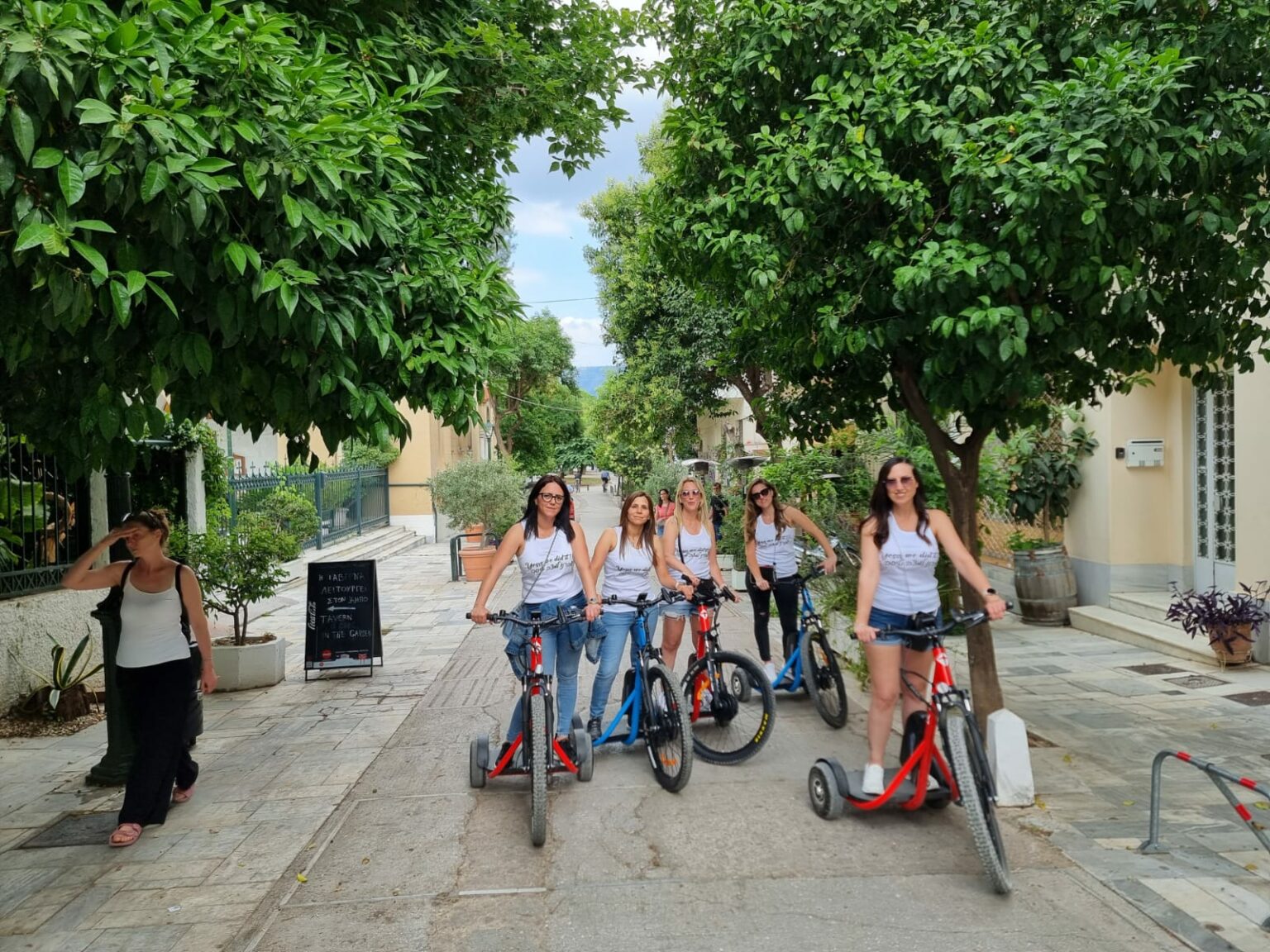
If the daytime itinerary has involved long walks, a guided city experience on an electric trike can offer a more comfortable way to see central Athens before nightfall. A local guide can connect ancient landmarks with the modern streets around them, while visitors save their evening energy for the view. Ayo Tours Athens is one example of a local operator offering guided e-trike tours, though the right choice depends on the group’s interests and schedule.
An Acropolis full moon night does not need an elaborate plan to be special. Check whether the site is open, choose a viewpoint that suits your group, and leave enough time to enjoy the city around it. If clouds or crowds change the scene, Athens still has plenty to offer under the same moon.
Frequently asked questions
Is the Acropolis open on a full moon night?
Not necessarily. A full moon does not guarantee extended opening hours; check the official Acropolis and Greek Ministry of Culture announcements for your date. Confirm event times, entry rules, and whether advance tickets are needed.
Where is the best place to see the Acropolis at night?
Areopagus Hill offers a close view, while Philopappos Hill gives a wider panorama. A café terrace in Monastiraki or Thissio is a more comfortable option if you would rather enjoy the view seated.
Can you see the full moon from the Acropolis?
The moon’s position changes throughout the year, so it may rise behind the Acropolis or appear elsewhere in the sky. Check the moonrise time and weather for your visit, and remember that seeing the hill from outside is different from entering the archaeological site.
What time should I arrive to see the Acropolis full moon?
Check the local moonrise time, sunset, and any special event schedule before choosing when to go. Arriving early can help you find a place at a popular viewpoint, especially around sunset or on an event night.
Is Areopagus Hill safe to visit at night?
The rocks can be uneven and slippery, so wear shoes with a good grip and take care, particularly after rain. If the climb feels unsuitable, choose a more accessible terrace with an Acropolis view instead.