
There is a particular kind of tiredness that only Athens in July can produce. It creeps up somewhere between the third flight of marble stairs at the Acropolis and the search for shade that never quite arrives. Most first-time visitors plan their days around a list of monuments, then quietly abandon half of it by early afternoon because the heat, the crowds, or the sheer walking distance between sites wins out. None of this means Athens is exhausting by nature. It means the city rewards a bit of planning before you arrive, so the sightseeing matches the energy you actually have.
The good news is that Athens packs an extraordinary amount of history into a walkable, compact center, so a first visit does not require weeks or a rigid itinerary. What it requires is knowing which experiences deliver the most for your time, and which combinations of ancient sites, neighborhoods, and food make the days feel full without feeling frantic. That is really the whole question behind planning a first trip here: what to prioritize, and how to move between it all without losing the morning to logistics.
Start With the Acropolis, but Time It Right
No first visit to Athens skips the Acropolis, and it shouldn't. Standing beneath the Parthenon, with the city spread out below in every direction, is one of those moments that photographs never quite capture. The scale of the columns up close, the worn marble steps, the sense that people have been climbing this same rock for over two thousand years - it tends to land differently than expected, even for visitors who thought they were prepared for it.
Timing matters more than most guidebooks admit. Arriving right at opening, before the tour buses unload, means cooler air and thinner crowds, especially between May and September. Late afternoon, an hour or two before closing, is the other sweet spot, when the light turns golden and the site empties out. Either way, pairing the climb with a visit to the Acropolis Museum afterward gives context to everything you just saw, filling in the stories behind the fragments and statues.
Wander the Ancient Agora and Plaka Without a Fixed Plan
Just below the Acropolis sits the Ancient Agora, the old marketplace and civic heart of classical Athens, where Socrates once argued philosophy under open sky. It is quieter than the main site, shaded by pine trees, and gives a real sense of what daily life looked like here well before the Parthenon existed. The Temple of Hephaestus, still remarkably intact, anchors one end of it.
From there, the Plaka neighborhood unfolds almost by accident. Narrow lanes lined with bougainvillea, small tavernas with three tables on the sidewalk, shops selling handmade sandals and olive oil soap - it rewards aimless wandering more than any checklist. Getting slightly lost here is not a problem to solve. It is, arguably, the point.
Eat Like You Live Here, Not Like You're Passing Through
Athens food culture rewards curiosity over caution. A souvlaki stand in Monastiraki, standing room only, often beats a sit-down restaurant nearby that caters mainly to tourists. Ordering a Greek coffee at a neighborhood kafeneio and watching the square for twenty minutes teaches more about the rhythm of the city than most museums.
Food tours built around this idea - hopping between a bakery, a cheese shop, and a family-run taverna - tend to work well for first-time visitors precisely because they remove the guesswork. Instead of guessing which loukoumades stand is worth the calories, someone who already knows the neighborhood makes the call, and you get to just eat.
See Modern Athens Alongside the Ancient City
It is easy to treat Athens purely as an open-air museum and miss the parts of it that are simply alive right now. Syntagma Square, with the changing of the guard outside Parliament, sits a short walk from the Panathenaic Stadium, the marble stadium built for the first modern Olympics in 1896. Seeing both in the same afternoon gives a fuller picture: this is a city with continuous history, not a place frozen at one point in time.
Modern neighborhoods like Koukaki and Pangrati, full of small cafes and street art, offer a useful contrast to the ancient sites nearby. A short detour into either one usually says more about contemporary Athenian life than another hour spent among ruins, however impressive those ruins are.
Consider How Much Walking You Actually Want to Do
This is where a lot of first-time visitors run into trouble. Athens looks compact on a map, but cobblestones, hills, and heat add up fast, especially for families with young children or older travelers. A day that looks reasonable on paper can turn into six kilometers of walking under a punishing sun, and by the third site everyone is cranky and looking for a bench.
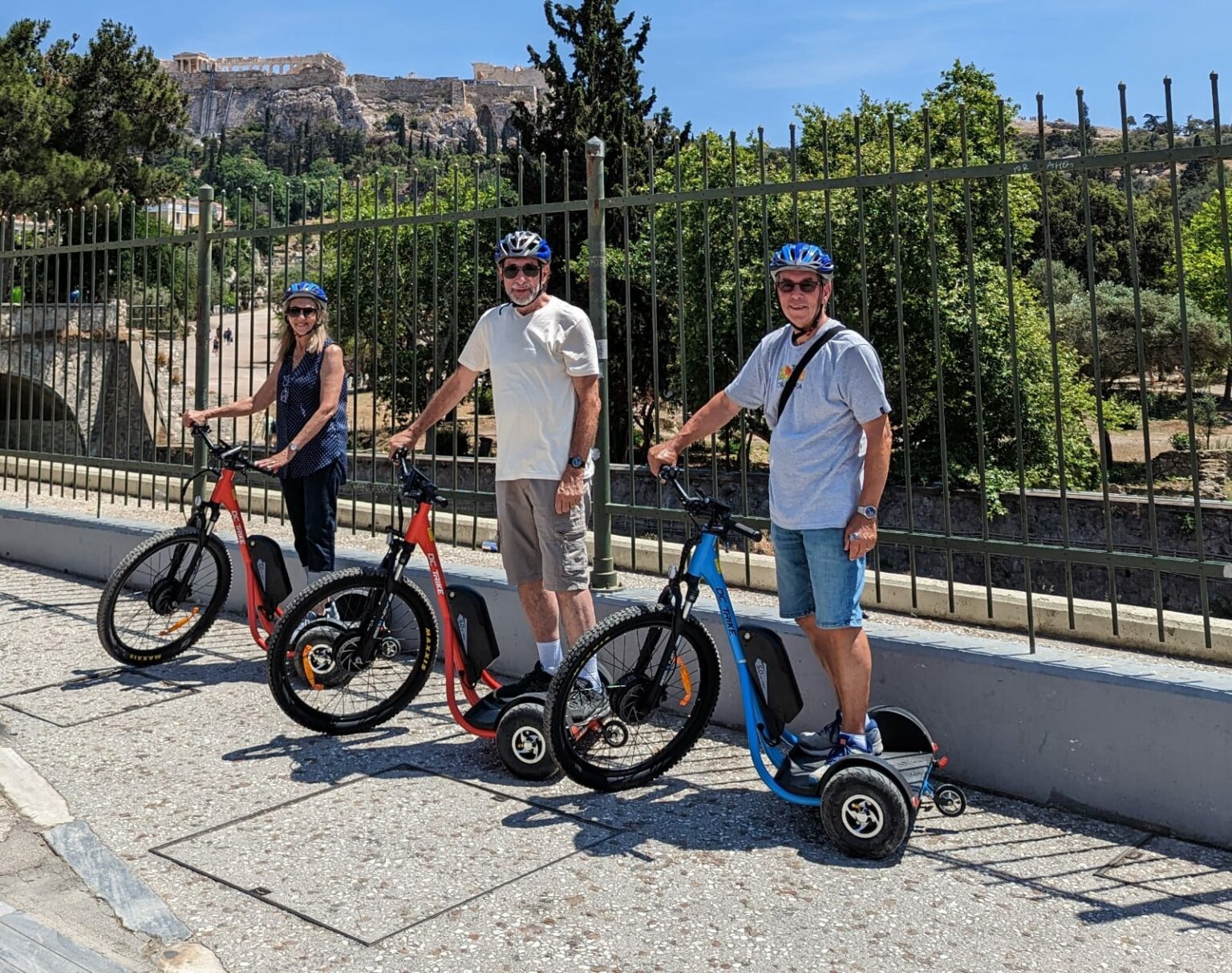
An alternative worth weighing is covering ground on something other than foot. Guided tours on electric trikes, for instance, let visitors move between the Acropolis viewpoint, the Ancient Agora, Plaka, and the Panathenaic Stadium without the fatigue of walking every stretch, while still stopping properly at each site with a guide explaining what you're looking at. Companies such as Ayo Tours Athens run exactly this kind of tour, and the appeal for families in particular is that children as young as five can ride along with a parent, no balancing or pedaling skills required, which solves the "the kids are tired" problem before it starts.
Don't Try to See Everything in One Day
The most common mistake among first-time visitors is cramming the Acropolis, the Agora, Plaka, Syntagma, and a museum into a single day, arriving back at the hotel exhausted and having enjoyed none of it fully. Athens rewards a slower pace. Spreading the major sites across two or three mornings, with afternoons left open for food, rest, or a neighborhood wander, tends to produce better memories than a checklist fully ticked but poorly savored.
It also helps to accept that some sites will be skipped, and that this is fine. Nobody has ever finished a first Athens trip wishing they had rushed more.
Among all the best things to do in Athens for first-time visitors, the common thread is balance: enough ancient history to feel the weight of the place, enough modern life to feel its pulse, and enough breathing room to actually enjoy both. Plan around your own stamina rather than an ideal itinerary borrowed from somewhere else, and the city tends to give back far more than a rushed visit ever could.
Frequently asked questions
What should I see first when visiting Athens for the first time?
The Acropolis and Parthenon are the iconic starting point for most first-time visitors. Arrive right at opening or an hour before closing to experience it with fewer crowds and better light. Following this with the Acropolis Museum provides context and stories behind what you've just seen.
Is it better to walk or use transport to get around Athens?
Walking is practical for central Athens since many major sites are close together, but the heat and distances between neighborhoods can be deceiving. Consider alternative transport like electric trike tours or public transport to preserve energy for sightseeing, especially during warmer months.
What food should I try as a first-time visitor to Athens?
Skip the tourist-focused restaurants and instead visit neighborhood spots like souvlaki stands in Monastiraki or a local kafeneio for Greek coffee. Food tours that hop between bakeries, cheese shops and family-run tavernas work well for newcomers since guides steer you toward authentic places worth visiting.
Can I see both ancient and modern Athens in one trip?
Yes, and it gives a much fuller picture of the city. Visit the Acropolis and Ancient Agora, then balance this with Syntagma Square, the Panathenaic Stadium, and modern neighborhoods like Koukaki to see how Athens lives today, not just how it lived thousands of years ago.
How do I avoid getting exhausted while sightseeing in Athens?
Plan your route before arriving, prioritize which sites matter most to you, and avoid the midday heat by sightseeing early morning or late afternoon. Take breaks at cafes, build in wandering time rather than rushing through a rigid checklist, and consider using e-trike tours to cover more ground comfortably.