
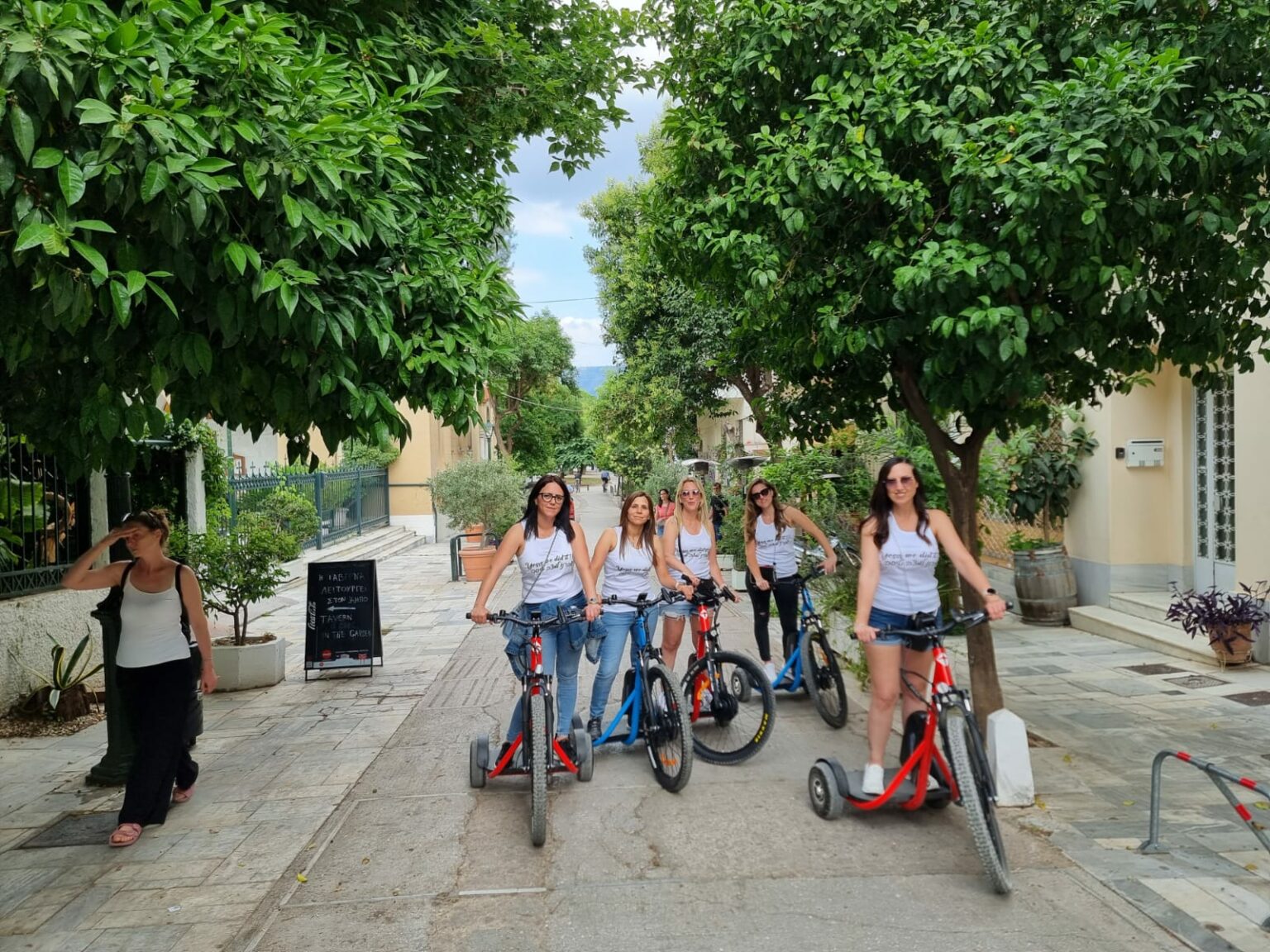
The walk up Lycabettus Hill is legendary in Athens travel forums - not for the views, though those are spectacular, but for the heat and the legs. On a summer afternoon, the limestone path turns into an oven, and the gradient doesn't let up. Most visitors arrive at the top wondering if they've made a terrible choice, their feet sore and their water bottle empty. Yet plenty of people make it to the summit every day, and not all of them are training for marathons. The difference is usually one decision made before they start.
Lycabettus Hill, the highest point in the city centre, sits just above Kolonaki and offers an unobstructed 360-degree view of Athens, from the Acropolis and Parthenon to the distant Hymettus and Penteli mountains, and on clear days all the way to the sea. It is one of the most photographed vantage points in Greece, and visitors who reach it without proper planning often spend the last twenty minutes catching their breath instead of enjoying it. The good news is that you have real options - and the best one might surprise you.
The funicular railway: the practical choice
The easiest and most direct way to the summit is the funicular - a cable railway that has been carrying people up and down since 1965. The station sits on Ploutarchou Street in Kolonaki, at the base of the hill, and takes about three minutes to reach the top. The cars are small and enclosed, and on busy afternoons you may queue for ten or fifteen minutes, but you arrive fresh and ready to spend time at the summit instead of recovering from the climb.
The funicular costs around 11 euros for a return ticket, or about 6 euros one way. It runs from early morning until late at night - typically 9 am to midnight in summer, earlier closing in winter - and the frequency is usually every 15 to 20 minutes during the day. If you plan to visit at sunset, which is when most people go, be aware that the last car down is usually around midnight, so check the timetable on the day you visit. The cars themselves are narrow and somewhat vintage in feel, but that is part of the Athens experience. On the way up, you will not see much - the view opens only at the top - but the ride itself is smooth and takes the work out of the equation.
The walking path: more time, more nature
If you enjoy hiking and have time, the path up is worth considering, especially if you go early in the morning or late in the afternoon when the sun is lower. The walk takes between 20 and 30 minutes depending on your pace and fitness, and the route winds through pine forest and past old city neighborhoods. The main walking trail starts near the National Library of Greece or from the streets around Kolonaki and is marked reasonably well, though it can be confusing in places.
The real advantage of walking is the experience itself. You pass under mature trees, the air is fresher than on the streets below, and you get a sense of the city from a different angle. Many locals use the path regularly, especially in the cooler months. The disadvantage is exactly what deters most summer visitors - the heat, the effort, and the fact that by the time you reach the top your energy is spent on breathing rather than looking around. If you do walk, start very early (before 8 am) or wait until after 5 pm, bring plenty of water, and wear good shoes. The path can be rough and uneven in places, and a twisted ankle on a steep section is not worth the detour.
What you will find at the top
The summit area itself is small but fully developed - a mix of tourist infrastructure and genuine charm. There is a simple but decent taverna and cafe that serves drinks and snacks, so you need not bring supplies if you do not want to. The views are genuinely extraordinary. From the flat viewing area, you can trace the layout of the entire ancient city - the Acropolis and Parthenon are the obvious centerpiece, but you can also see the Temple of Olympian Zeus from above, the Panathenaic Stadium in its landscaped valley, and on clearer days the Saronic islands across the water. Many people come just for sunset, which turns the city gold and is worth the trip alone.
There is also a small white chapel at the very top, dedicated to Saint George, which you can enter and where locals sometimes stop to light a candle. The whole atmosphere is quieter and more reflective than you might expect for such a popular spot. If you bring a camera or good phone, allow at least an hour to explore and take photos from different angles around the summit.
When to go: beating the crowds and the heat
The busiest times are late afternoon through sunset, particularly from May through September. If you visit then, expect queues at the funicular, crowds at the top, and a lot of other people sharing your sunset moment. That is fine if you enjoy the energy, but it is worth knowing. The best times are early morning, before 9 am, or mid-afternoon on a quieter weekday. Many visitors also come in the evening - say 7 or 8 pm in summer - when the heat has eased but there is still light for photos.
The view varies dramatically with the season and weather. Winter offers clearer air and fewer visitors, but shorter daylight. Summer heat makes the climb uncomfortable but the extended evening light is a gift for photographers. Spring and autumn are genuinely ideal - warm but not punishing, and light that is kind to the eyes.
Combining the hill with the rest of the city
Lycabettus Hill sits naturally into the northern boundary of the Kolonaki neighborhood, which is worth an hour or two of your time. The streets around it are lined with good coffee shops, small restaurants, and independent boutiques. You can easily visit the hill and then walk down into Kolonaki to eat or shop, or combine it with a visit to the nearby National Archaeological Museum, where the highlights span from Cycladic figurines to the spectacular Antikythera bronze collection.
If you are exploring more of Athens over several days, the hill works best as a morning or early evening stop rather than as your main activity for an afternoon. Many travelers visit once on their first or second day to get their bearings from above, then return at sunset later in their trip. Others combine it with a guided tour of the wider city - a local guide can point out which neighborhoods you are looking at and explain what you are seeing, which adds depth to the view.
A gentle alternative for families and less confident walkers
For families with children or anyone with mobility concerns, the funicular removes the barrier completely. Children as young as five or six can ride it without trouble, and the summit area is flat and easy to move around. If you are traveling with elderly relatives or anyone who finds steep hills difficult, the funicular makes Lycabettus Hill accessible in a way the walking path does not. The ride itself is brief and straightforward, and the reward at the top is proportional to the effort required - which is to say, minimal effort and maximum reward.
The truth is that most of Athens' other major ancient sites - the Acropolis, the Temple of Zeus, the Agora - involve walking on stone paths that are often steep and uneven. Lycabettus Hill is one place where you can choose a genuinely comfortable approach and still have the full experience. You reach the top with your legs intact, your energy available for the view, and time to linger rather than rush back down.
Getting to the top of Lycabettus Hill is fundamentally simple - take the funicular if you value your time and comfort, walk if you have time and enjoy the experience of climbing. The view is worth the journey either way, and the three minutes or twenty-five minutes you spend reaching the summit disappear entirely when you step out and see the whole of Athens spread below you. Plan for it as one stop among many rather than as a major expedition, bring water, and choose your time of day based on what matters to you - solitude, light, temperature, or sunset.
Frequently asked questions
How long does it take to walk up Lycabettus Hill?
The walking path typically takes between 20 and 30 minutes depending on your fitness level and pace. The route winds through pine forest and past local neighborhoods, though the gradient is steady and the limestone path can be quite hot during the day.
How much does the funicular to Lycabettus Hill cost?
A one-way ticket costs around 6 euros, and a return ticket is approximately 11 euros. The journey takes about three minutes and runs from early morning until late at night, usually between 9 am and midnight in summer with departures every 15 to 20 minutes.
What is the best time to visit Lycabettus Hill?
Sunset is the most popular time, when the city turns golden and the light is ideal for photography. If you're walking, go early in the morning before 8 am or after 5 pm when temperatures are lower. The funicular operates until around midnight in summer.
What can you see from the top of Lycabettus Hill?
The summit offers unobstructed 360-degree views including the Acropolis and Parthenon, the Temple of Olympian Zeus, Panathenaic Stadium, and on clear days the distant Hymettus and Penteli mountains and Saronic islands. There is also a small white chapel dedicated to Saint George.
Is there food and drink at the top of Lycabettus Hill?
Yes, a taverna and cafe at the summit serve drinks and snacks, so you don't need to bring supplies unless you prefer. The area is small but well-developed with viewing platforms and seating for visitors to spend time taking in the views.
What's the easiest way to get to the top of Lycabettus Hill?
The funicular railway is the easiest option, delivering you to the summit in three minutes without physical effort. It's ideal for families, older visitors, or anyone who wants to arrive fresh and ready to enjoy the views rather than recovering from a climb.